4 hr
Tokyo JDM Night Tour: Daikoku PA, Tokyo Drift Locations & Iconic Landmarks
- Entry ticket
- Mobile voucher
- Valid same day
- Free cancellation
Daikoku and Liberty Walk Tour — Japan's Underground Car Culture
Where Tokyo's tuner underground meets expressway asphalt, nightly since 1997
Compare fares, pick the fit — all bookings are mobile-voucher and eligible for free cancellation where shown.
4 hr
4 hr
3 hr 30 min
Daikoku and Liberty Walk Tour tours provide an authentic grassroots car scene experience, whereas Umihotaru offers a refined, scenic observation deck focused on general tourism. Most enthusiasts find the raw energy of Daikoku more engaging for vehicle photography.
|
Top pick Daikoku PA |
Umihotaru PA | |
|---|---|---|
| Vibe | Raw street culture | Polished commercial rest stop |
| Primary Visitor Focus | Vehicle enthusiasts and tuners | General public and sightseers |
| Accessibility | Vehicle access only | Accessible via toll road bus |
| On-site Amenities | Basic vending machines | Restaurants, shops, and lounge |
| Likelihood of Car Meets | High frequency | Low frequency |
| Engineering Focus | Aftermarket modification culture | Bridge and tunnel technology |
| See tickets & prices |
Verdict: While daikoku and liberty walk tour tickets are not required, this location is the premier choice for automotive enthusiasts, while Umihotaru is better suited for casual travelers seeking Tokyo Bay views.
Hand-picked experiences loved by thousands of travelers
4 hours
Free Cancellation
Dive into Tokyo's legendary car culture with a night tour to Daikoku PA, Rainbow Bridge & Tokyo Tower.
3 – 3.5 hours
Free Cancellation
Ride shotgun in legendary Japanese sports cars through Tokyo's iconic car culture hotspots.
4–6 hours
Free Cancellation
Cruise Tokyo in a legendary Nissan R34 Skyline with a pro driver-photographer by your side.
Enter via the Bayshore Route and secure a parking spot.
Observe modified vehicles and JDM culture.
Visit the convenience store and take photos of the iconic spiral.
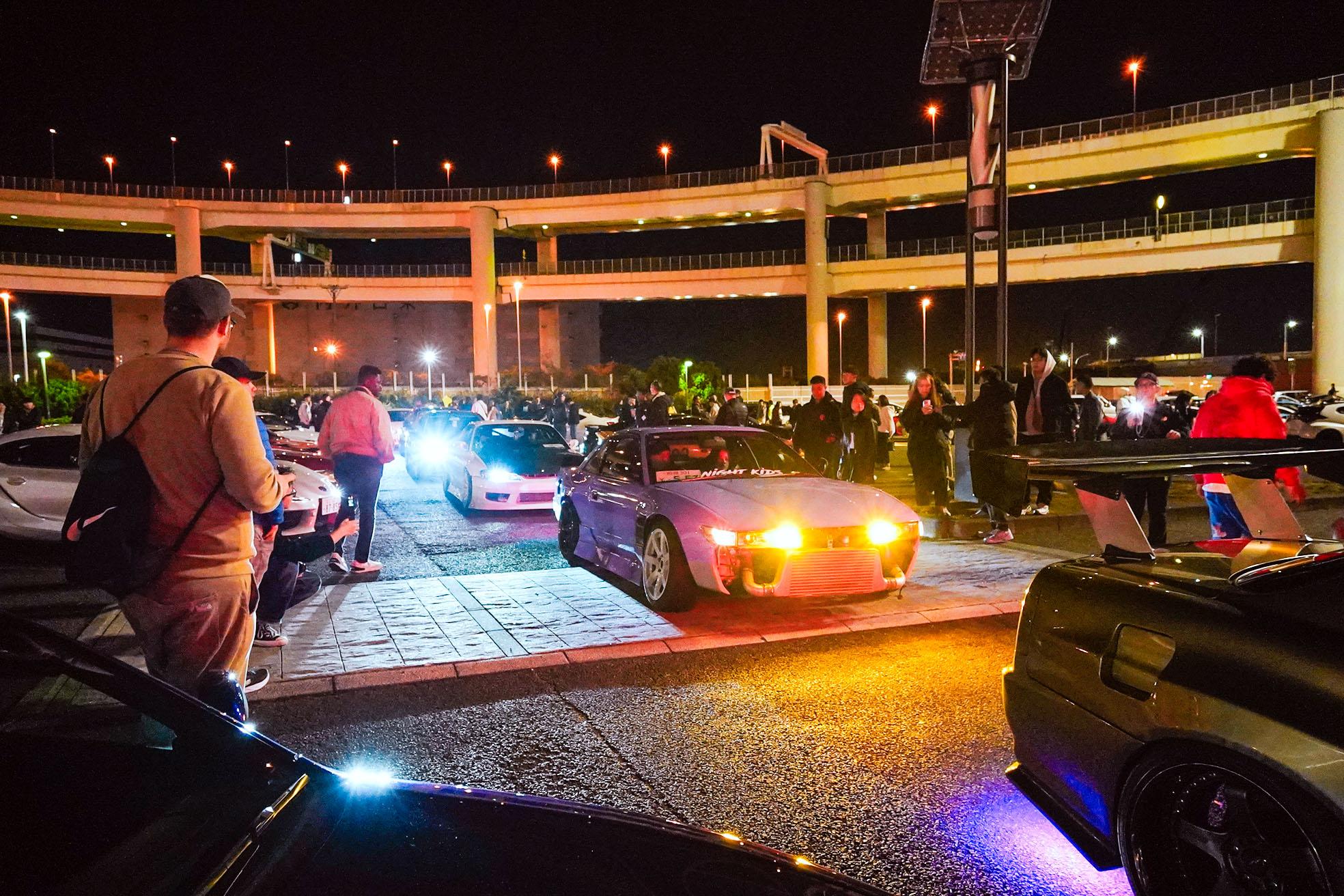
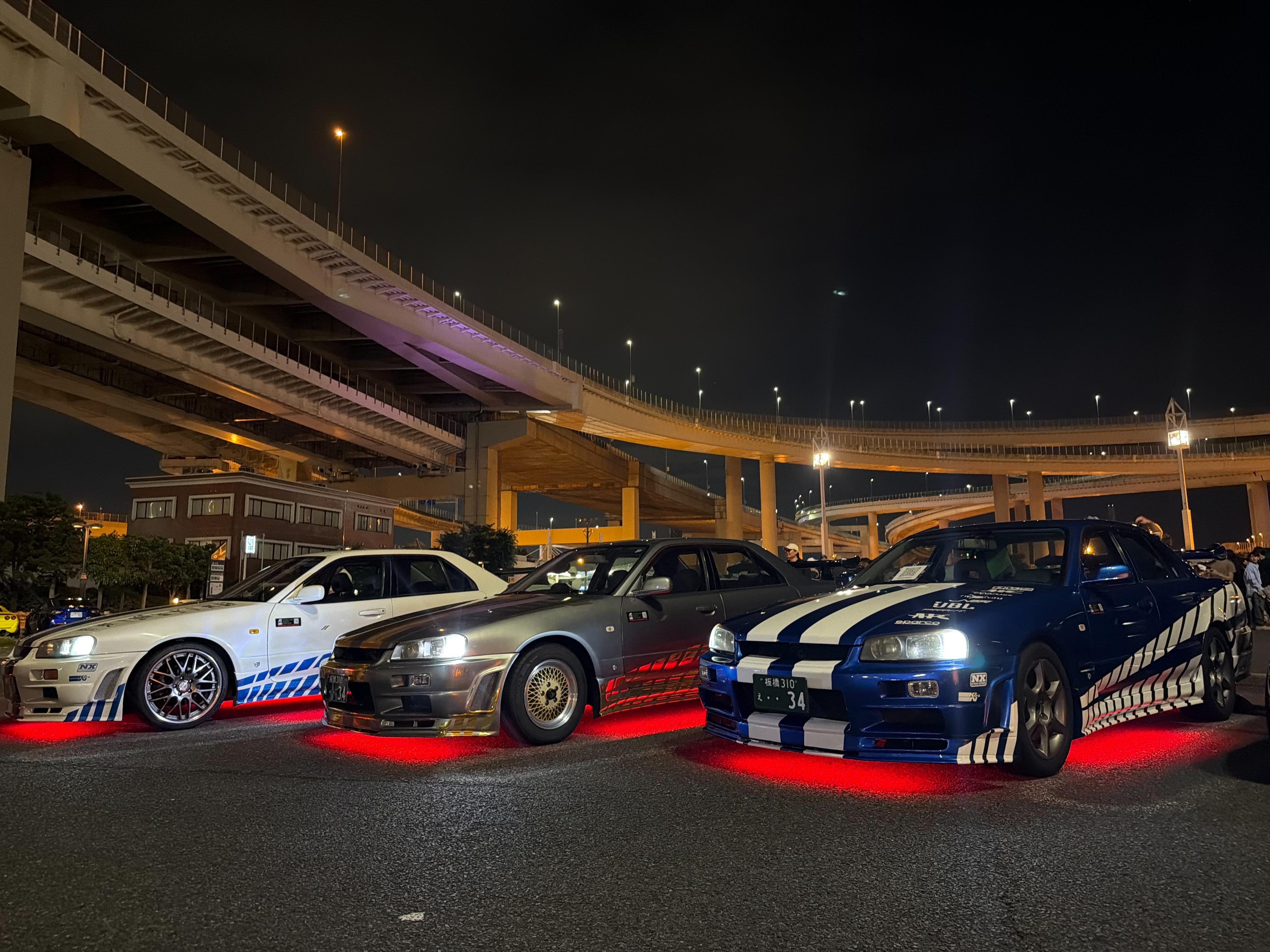
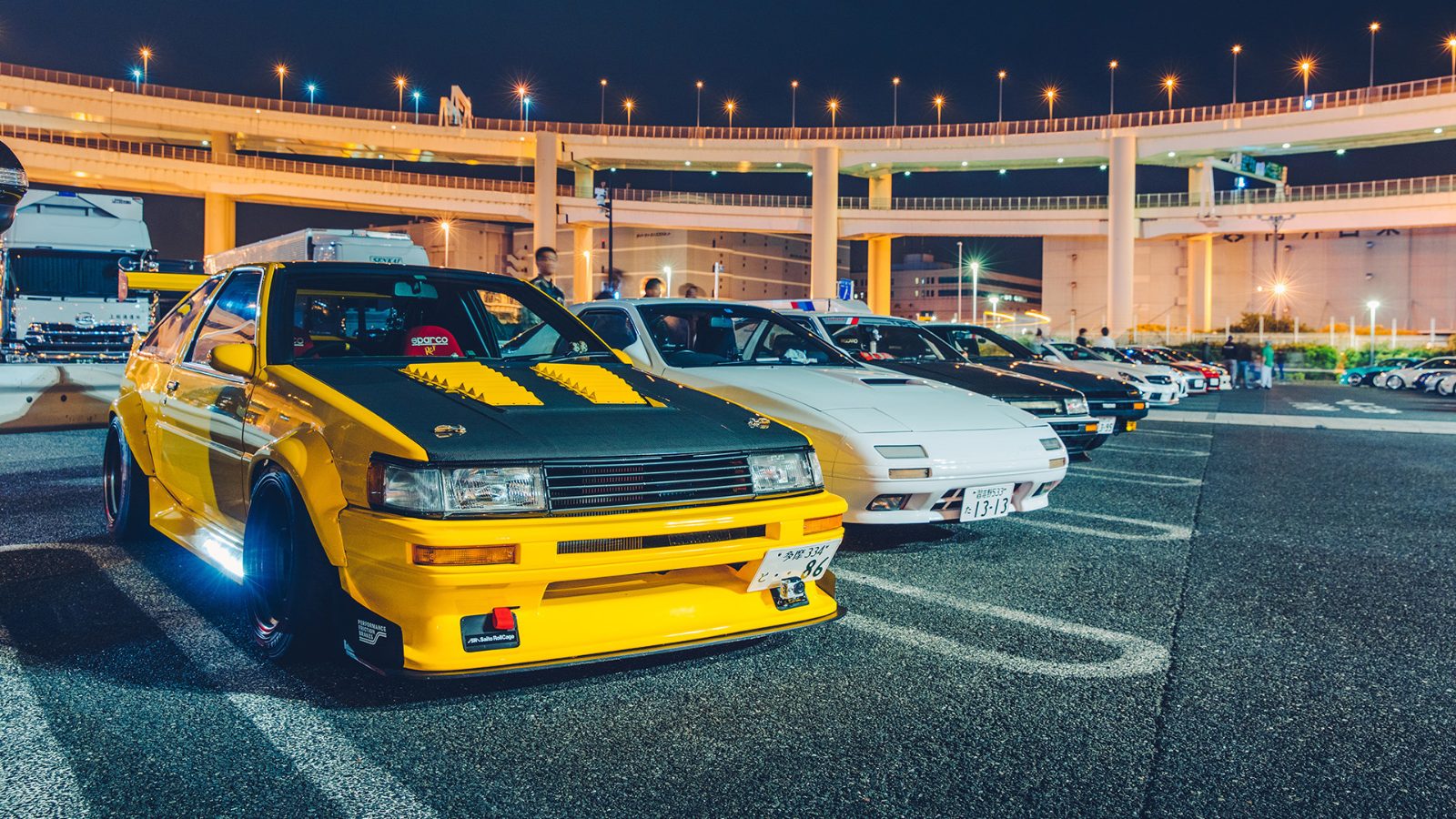
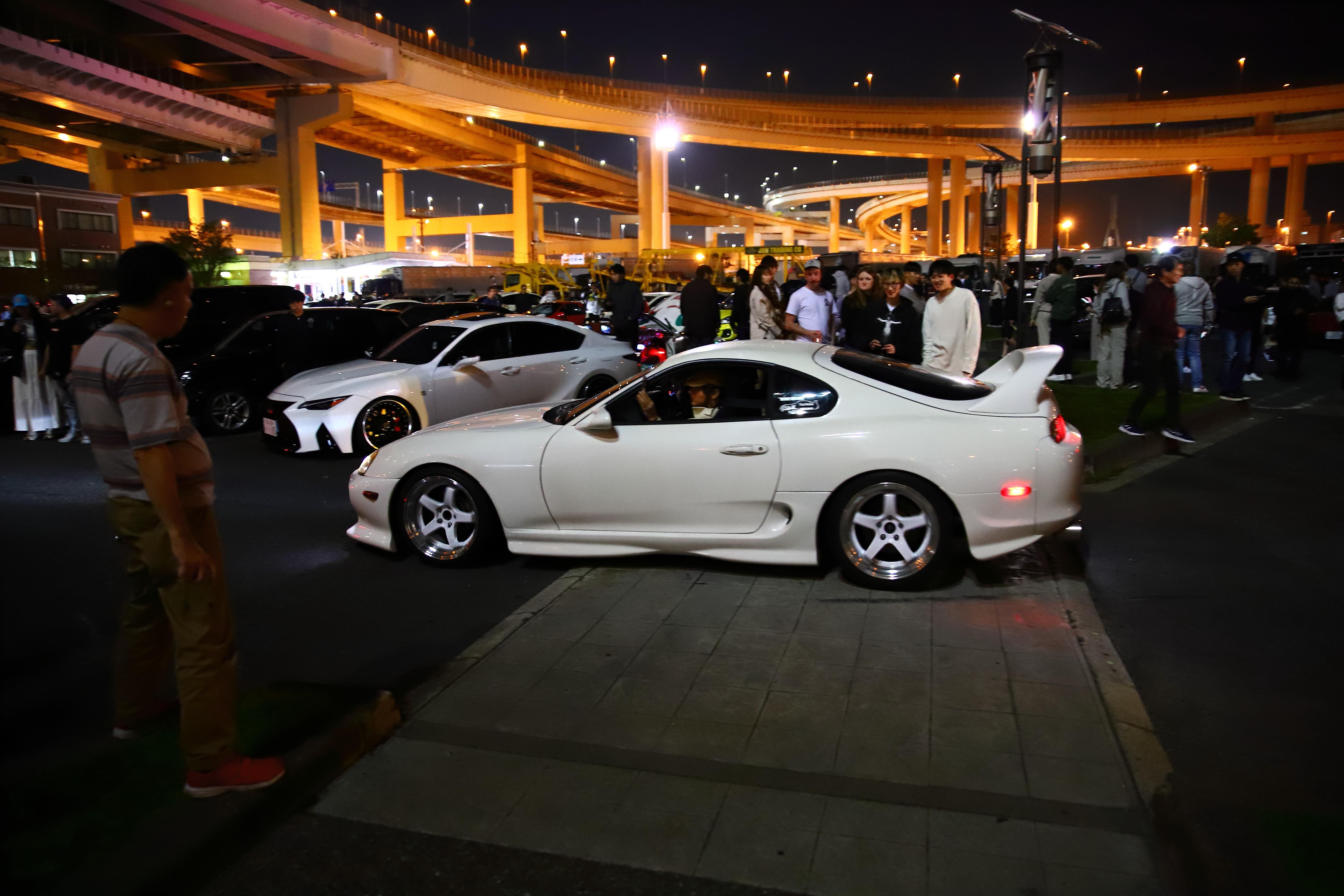
The unique overhead concrete ramp is the most recognizable architectural feature for your daikoku and liberty walk tour photos. It forms a visual loop above the parking bays and provides a cinematic entrance for cars.
The central tower acts as a landmark within the Daikoku Parking Area. It is a frequent backdrop for photography during a daikoku and liberty walk tour.
This second building offers views of the waterfront. It serves as a peaceful escape for those on a daikoku and liberty walk tour to view the Tokyo Bay skyline.
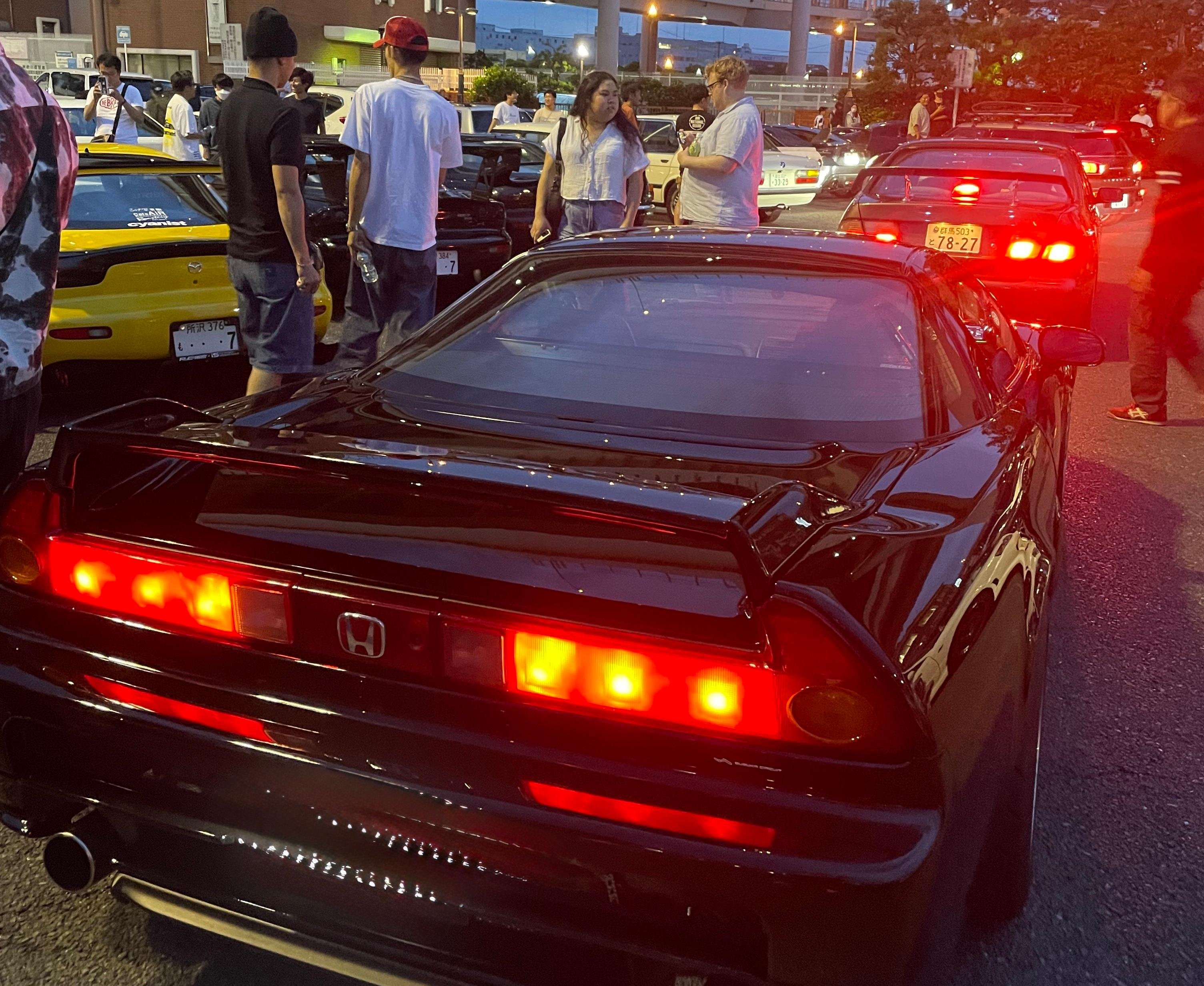
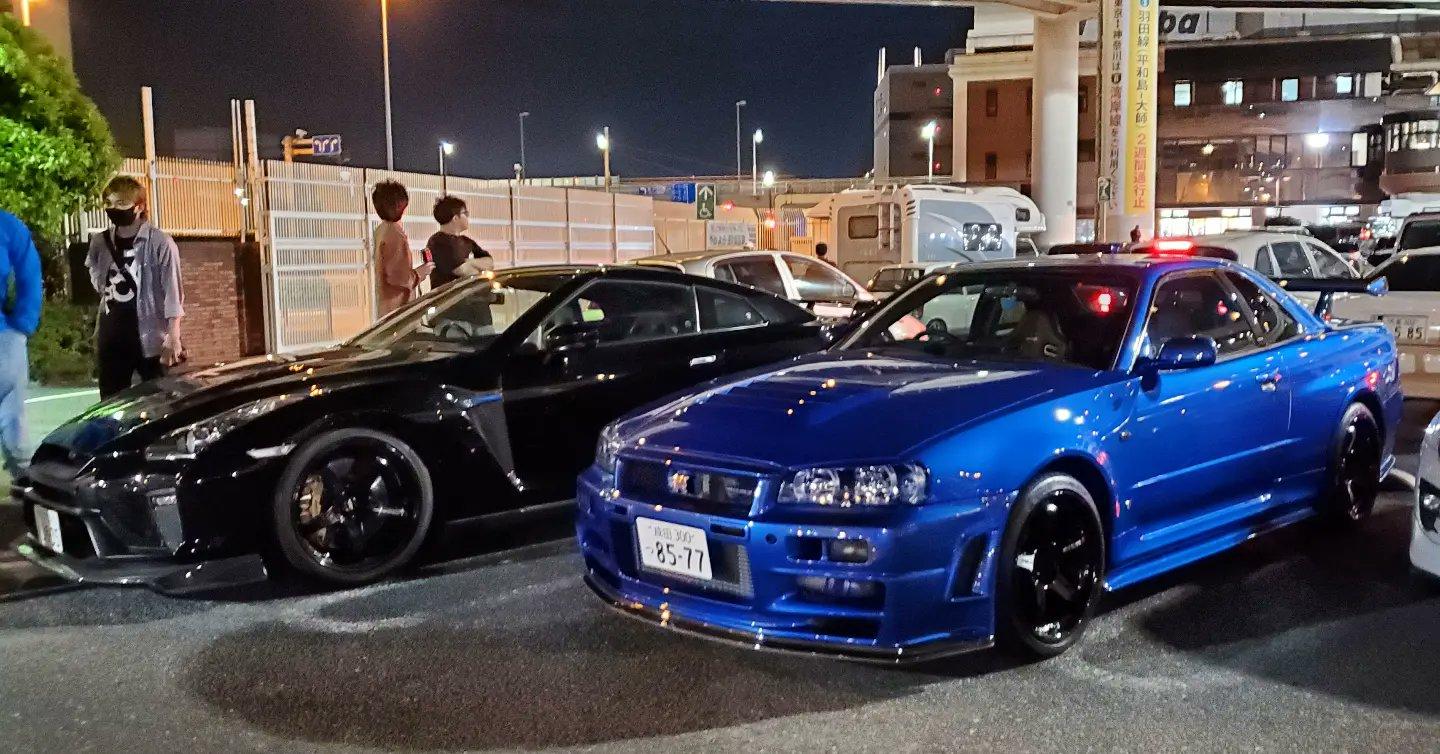
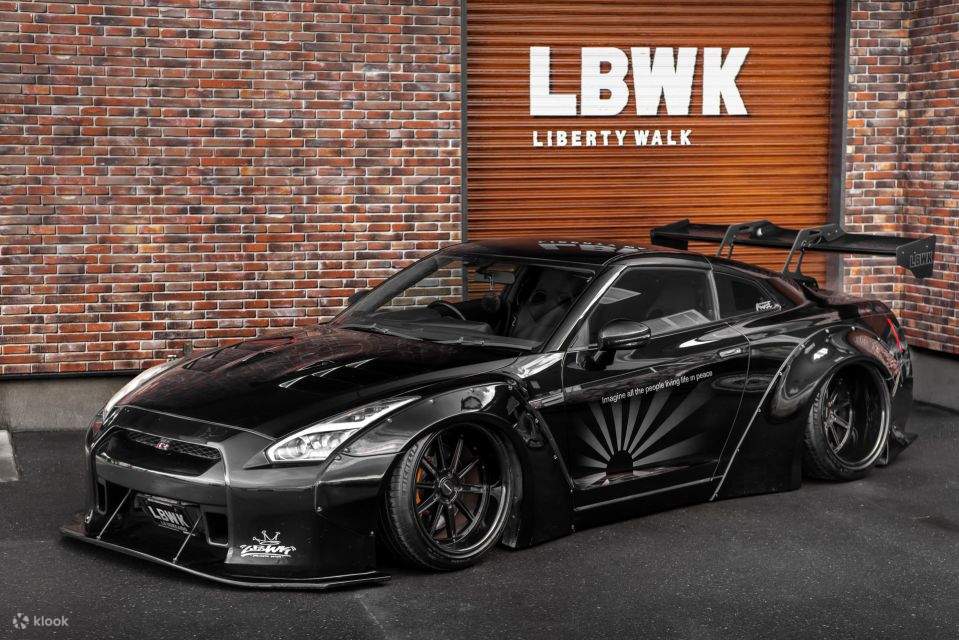
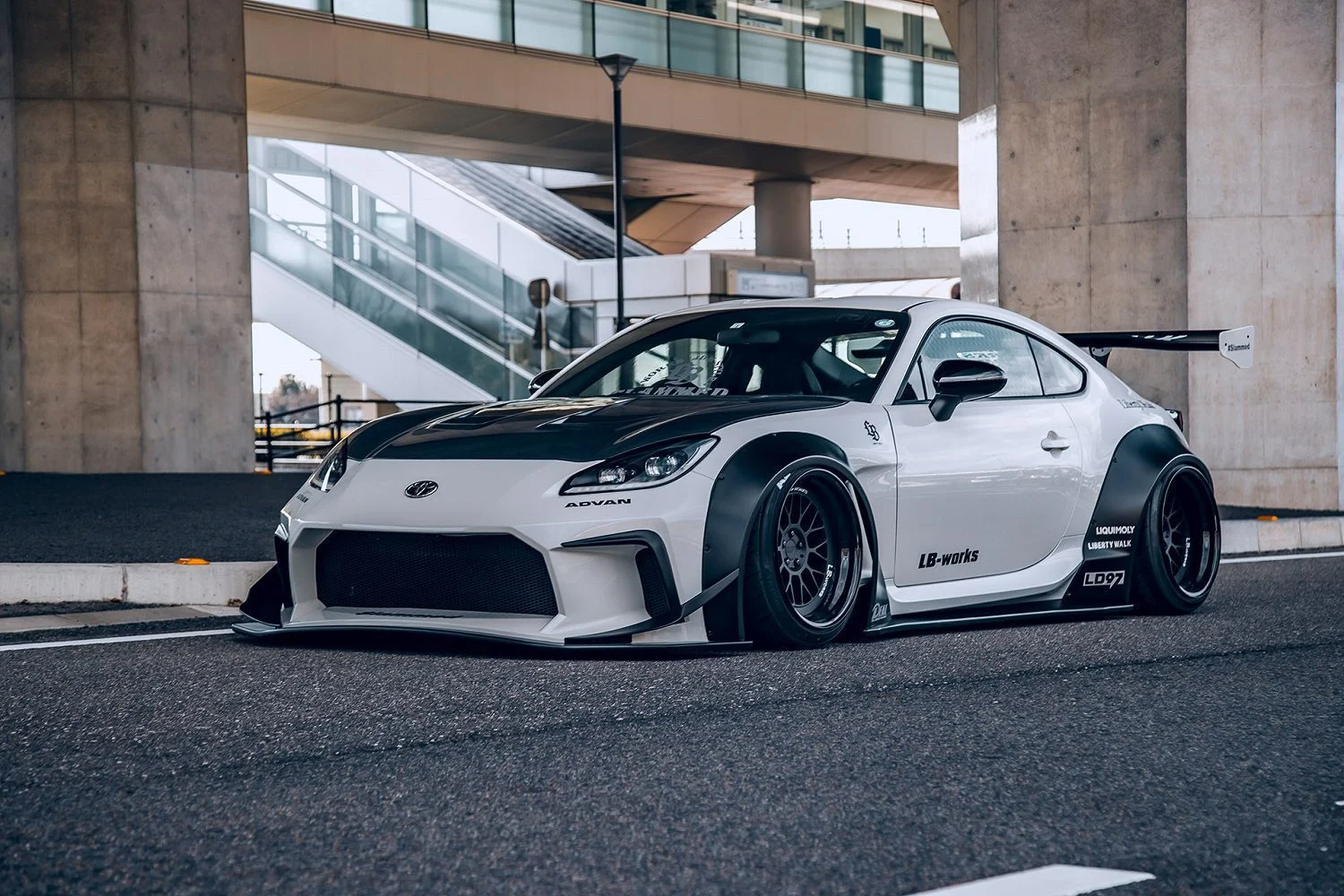
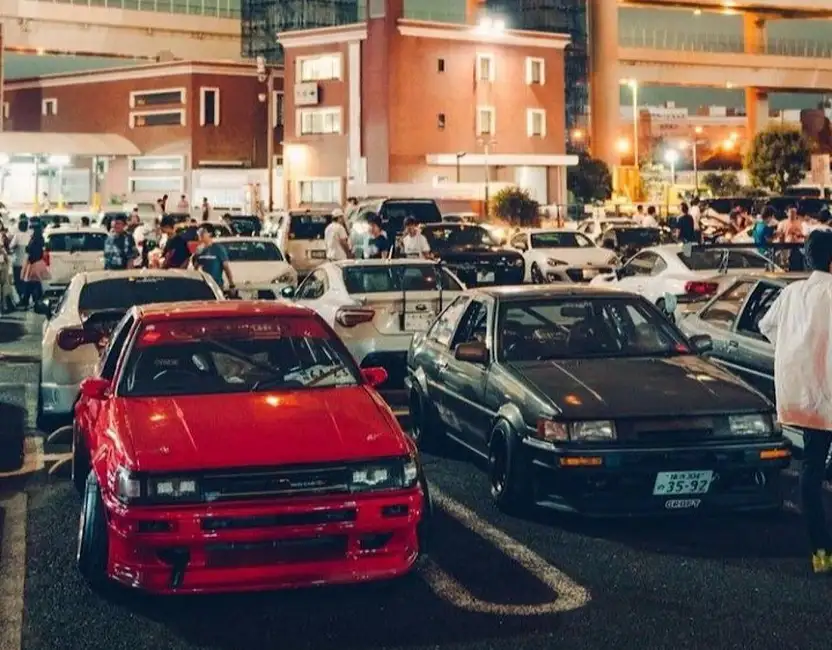
The gathering of modified vehicles is the primary draw. You will see everything from classic drift builds to modern exotics during your daikoku and liberty walk tour.
The facility includes a convenience store and snack area. It is the central hub for visitors during their daikoku and liberty walk tour.
You arrive at Daikoku Futo between seven and nine in the evening, when the lot holds maybe fifty cars and the atmosphere is still relaxed. Your guide parks near the upper deck, where sightlines are clearest, and walks you through the unwritten rules: no touching cars without permission, no pointing cameras at faces, no standing in driving lanes. Within thirty minutes, the population doubles. A Liberty Walk-kitted Lamborghini Huracán rolls in, its fenders flared twelve inches past stock, and a crowd forms. You approach with your guide, who introduces you to the owner—a fabricator from Kanagawa who spent eighteen months on the build. He opens the engine bay, explaining the custom exhaust routing in Japanese while your guide translates. By nine-thirty, the lot is three-quarters full. You walk the rows, pausing at a Hakosuka Skyline with period-correct SSR Mk-IIIs, then a Mazda RX-7 FD whose rotary engine idles with the staccato bark that defined 1990s tuning. Your guide points out the crews: the Osaka contingent parks together in the northwest corner, the Liberty Walk team occupies the southeast. You hear engines rev, see phone cameras lift, watch a Nissan Silvia execute a slow crawl through the crowd, its exhaust popping on deceleration. At ten-fifteen, police lights appear at the entrance. The guide signals—it is time to leave before the closure. You exit through the toll booth, the skyline of Minato Mirai glowing across the bay, carrying a memory of Japan's automotive underground in its rawest, least filtered form.
All the details about your upcoming adventure in one place
Join this daikoku and liberty walk tour to explore Japan's legendary car culture hub at Daikoku Parking Area, where modified vehicles and custom builds gather nightly. The experience includes guided access to Liberty Walk's workshop facilities and direct interaction with automotive enthusiasts. These daikoku and liberty walk tour tickets provide entry to both the parking area meet and exclusive workshop zones.
Daikoku Futo Parking Area opened in 1997 as an ordinary rest stop on the Bayshore Route—but within months, it became the epicenter of Tokyo's illegal street racing diaspora. When police crackdowns shuttered Tatsumi and Honmoku, racers migrated to this wedge of asphalt jutting into Yokohama Bay, transforming a government parking lot into Japan's most notorious car meet. By 2001, Friday and Saturday nights drew over 500 vehicles: Skyline GT-Rs with carbon bonnets, Supras on fifteen-inch-wide rear tires, Fairlady Zs wearing full aero kits from Liberty Walk, the Nagoya fabricator whose bolt-on overfenders became synonymous with aggressive stance culture. The parking area occupies fifteen hectares of reclaimed industrial land in Tsurumi Ward, bordered by container terminals to the south and the Yokohama Bay Bridge to the north. Its layout—two levels, open sight lines, minimal lighting—makes it ideal for photographers and spectators. Liberty Walk's founder, Wataru Kato, began attending in the early 2000s, using Daikoku as a proving ground for his widebody prototypes before international fame arrived. Today, the meet persists despite periodic police closures: officers arrive after midnight on busy weekends, forcing the crowd to disperse, only for gatherings to resume by two a.m. The cycle has lasted two decades. What separates the Daikoku and Liberty Walk tour from casual car spotting is access to the community's inner circle. Guides connect visitors with crew leaders, translate technical conversations about suspension geometry and turbo upgrades, and navigate the unwritten codes that govern the lot. Photographers arrive during the golden hour before sunset to capture chrome against shipping cranes; enthusiasts come after dark, when headlights and underglow turn the asphalt into a rolling gallery. The scene draws international pilgrims—American YouTubers, European collectors, Southeast Asian tuners—all chasing the aesthetic that Liberty Walk exported worldwide but that remains rooted in this single parking area. Daikoku is not a museum. It is a working subculture, and the tours offer structured entry into a world that operates outside official channels, where respect is earned through car knowledge and parking etiquette, not ticket price.
Daikoku is not a museum—it is a working subculture, where respect is earned through car knowledge and parking etiquette, not ticket price.
Dress comfortably and casually for your daikoku and liberty walk tour. Bring a light layer if visiting at night, as the waterfront location can get breezy.
There are no security checkpoints at Daikoku Parking Area. Keep your belongings with you at all times during your daikoku and liberty walk tour.
Photography is permitted in public spaces at Daikoku Parking Area. Always respect the privacy of vehicle owners during your daikoku and liberty walk tour.
The area is a public rest stop suitable for families. Keep children close to your vehicle at all times, especially during busy car meets.
The parking area facilities are wheelchair accessible. Please note that the site is designed for vehicles, and pedestrian movement is limited to designated areas.
A convenience store and snack corner are available on-site for quick refreshments. Avoid littering to help keep Daikoku Parking Area open for enthusiasts.
Opening Hours
00:00–23:59 (Always open)
Address
15-157 Daikoku-futo, Tsurumi-ku, Yokohama, Kanagawa 230-0054, Japan
Arrival Advice
Best arrival window: 19:00–22:00
Entrance Fee
0 JPY (Expressway toll applies)
Storage
No lockers available at the rest area
Navigation
Accessible only by expressway vehicle
Car · 30-60 min · Varies by toll
Follow the Shuto Expressway Bayshore Route (Wangan Line) to the Daikoku PA off-ramp.
Taxi · 45 min · High cost
Hire a professional tour driver who knows the expressway access points.
As Daikoku Parking Area is a public rest stop with 0 JPY entrance fee, there are no tickets to cancel. If you have booked a private daikoku and liberty walk tour, check with your specific operator for their unique refund terms.
Recommended time
2-3 hours
Planning a daikoku and liberty walk tour requires careful timing to observe the modified vehicles while respecting the space. Arriving within the 19:00–22:00 window helps you secure a spot before the lot reaches capacity, which is essential for those seeking daikoku and liberty walk tour tours. If you find the parking area becoming crowded, consider that visitor numbers shift significantly as the modified car scene fluctuates, making early evening the most reliable time to secure your daikoku and liberty walk tour tickets.
Crowd levels through the day
Weather · crowds · average price — dots go green to amber to red as each metric rises.
Mild weather and cherry blossoms in nearby Yokohama parks make for comfortable visits.
Warm, humid nights; perfect for late-evening car spotting during your daikoku and liberty walk tour.
Clear, cool nights provide excellent conditions for photography.
Crisp, clear air creates a moody backdrop against the Yokohama Bay Bridge.
Visit on weekdays to avoid police overcrowding closures at Daikoku Parking Area.
Book a licensed daikoku and liberty walk tour to navigate expressway logistics safely.
Always follow instructions from staff or police if they request the area be cleared.
Bring a stable camera for the best shots of neon-lit car builds.
Never touch or lean on vehicles displayed at the daikoku and liberty walk tour meet.
Daikoku Parking Area opened in March 1987 as a standard rest facility on the Bayshore Route of the Shuto Expressway, designed to serve commercial traffic moving between Yokohama Port and Tokyo's industrial corridors. The location—reclaimed land jutting into Tokyo Bay—offered panoramic water views but initially attracted only truckers and late-night commuters seeking vending-machine coffee and restroom breaks. By the mid-1990s, a grassroots transformation began when modified car owners discovered the expansive asphalt lot provided enough space to gather without blocking residential streets, and the 24-hour access aligned perfectly with Japan's nocturnal tuning culture. The site's evolution accelerated after 2008, when Wataru Kato founded Liberty Walk in Nagoya and began producing widebody kits that challenged traditional Japanese restraint in automotive modification. Liberty Walk's aggressive fender flares, exposed rivets, and slammed suspension found an ideal showcase at Daikoku, where weekend meets grew from dozens of vehicles to hundreds by 2012. International media coverage of these gatherings—featuring Lamborghinis on air suspension parked beside turbocharged Nissans—cemented the parking area's reputation as the epicenter of Japan's boldest custom scene. The daikoku and liberty walk tour phenomenon emerged organically as foreign enthusiasts began planning visits around the Saturday night meets, treating the lot as both museum and living exhibit. Police interventions intensified after 2015, when overcrowding and noise complaints from nearby residential zones prompted periodic late-night closures and stricter enforcement of Japan's vehicle modification laws. Organizers responded by staggering arrival times and self-policing antisocial behavior, preserving access while managing growth. Today, Daikoku operates under a tacit agreement: gatherings remain tolerated as long as participants respect noise ordinances and vacate by midnight on enforcement nights. The Liberty Walk influence persists in every widebody kit and cambered wheel that rolls through, a testament to how a highway rest stop became an architectural pilgrimage site for the global JDM community seeking authenticity beyond daikoku and liberty walk tour tickets or formal exhibitions.
Daikoku Parking Area opens as a Shuto Expressway service facility on reclaimed Yokohama waterfront land.
Modified car owners begin informal weekend gatherings, drawn by 24-hour access and spacious layout.
Wataru Kato establishes Liberty Walk in Nagoya, pioneering widebody kits that will define the site's aesthetic.
International automotive media coverage transforms Saturday meets into a must-visit destination for JDM enthusiasts.
Police implement periodic closures to manage crowds, leading to community self-regulation and midnight curfews.
The parking area solidifies its status as a global pilgrimage site for custom car culture and Liberty Walk tours.
Stand near the center of the asphalt to capture the alignment of wide-body kits and aftermarket aero. This vantage point provides the cleanest frame for the Daikoku and Liberty Walk tour aesthetic.
Position yourself on the elevated walkway for an aerial perspective looking down at the diverse range of JDM legends. This angle highlights the aggressive stance and custom wheel fitment of lowered vehicles.
Walk toward the outer perimeter where enthusiasts park to showcase custom paint jobs and carbon fiber details away from the heavy traffic. These spots offer better lighting for static shots during a Daikoku and liberty walk tour tour.
Capture arrivals from the entrance ramp as modified machines transition into the lot under the bright overhead expressway lights. This location is ideal for high-contrast images requiring daikoku and liberty walk tour tickets-level access to the action.
Visitors participating in a daikoku and liberty walk tour will find dining options limited to the facilities within the parking area itself. Since there are no external restaurants within walking distance, most attendees rely on the on-site convenience store or the cafeteria to refuel between observing the modified cars and JDM culture.
This casual spot offers classic Japanese comfort food like curry rice and ramen. It serves as a practical choice for a quick meal while waiting for the evening car meet to reach its peak.
Stocking various hot snacks, bento boxes, and beverages, this store is essential for late-night visitors. It remains open for those securing daikoku and liberty walk tour tickets or planning their arrival during the recommended 19:00–22:00 window.
Multiple machines offer hot canned coffee and light refreshments throughout the parking area. These provide a simple way to stay energized while documenting the automotive landscape during daikoku and liberty walk tour tours.
Real experiences from real travelers
The daikoku and liberty walk tour exceeded expectations. Our guide knew every detail about the widebody modifications and introduced us to several builders. Arrived around 9 PM when the parking area was filling up with modified vehicles. The proximity to Yokohama Bay Bridge creates an iconic backdrop for photography.
Finally experienced the legendary Daikoku furai scene through this tour. Seeing Liberty Walk cars in their natural habitat was worth the trip to Japan alone. Guide facilitated conversations with owners who explained their build philosophies. The late-night atmosphere with Mount Fuji silhouetted in the distance felt surreal.
This Yokohama car culture tour delivered authentic access to the modified vehicle scene. Met owners of six-figure builds who were surprisingly approachable. Our tour leader had connections that got us close to vehicles usually roped off at shows. The casual parking area setting made interactions feel genuine rather than staged.
Solid experience for anyone interested in Japanese tuning culture. The daikoku and liberty walk tour tickets included access to areas where casual visitors might not feel welcome. Guides provided historical context about how this parking area became the epicenter of Tokyo's street racing heritage. Would have preferred more time examining individual builds.
As a photographer, this tour provided angles and access impossible to get independently. Liberty Walk vehicles under sodium lights created the exact aesthetic I traveled to capture. Guide coordinated with owners for proper shoots and shared technical details about suspension geometry and aero function.
The daikoku and liberty walk tours are essential for anyone serious about Japanese automotive culture. Witnessed a spontaneous drag race departure around midnight. Guide explained the unwritten etiquette of Daikoku PA and helped navigate the social dynamics. Seeing widebody Porsches next to classic Skylines illustrated the scene's diversity.
Attended the daikoku and liberty walk tour during a major meet weekend. Over 200 modified vehicles filled every section of the parking area. Our guide's relationships with the Liberty Walk crew meant we got detailed explanations of the riveted fender installation process. The energy at 11 PM rivaled any organized car show.
This tour transforms a parking area visit into an educational experience about modification culture and aerodynamic theory. Owners discussed downforce calculations and tire clearance geometry. The Liberty Walk philosophy of aggressive aesthetics paired with functional engineering became clear through hands-on explanations. Cool night air and distant industrial lights added to the atmosphere.
The daikoku and liberty walk tour provided context I never would have gained wandering alone. Guide translated technical discussions and explained the relationships between different tuning shops. Watching new arrivals position their builds in the lot revealed an unspoken hierarchy. Photography opportunities were endless as vehicles rolled in throughout the evening.
Experiencing Daikoku Parking Area through this structured tour meant no confusion about where to stand or how to approach owners. Guide facilitated introductions and ensured we respected the space. Liberty Walk vehicles dominated the premium spots, but the variety extended to vintage bosozoku style bikes and drift-prepped Silvias. The casual format felt more authentic than any convention center show.
Everything you need to know for your journey
Entry to Daikoku Parking Area is 0 JPY and requires no tickets, though guided daikoku and liberty walk tour experiences may charge for transportation. You only need to cover your expressway toll.
Daikoku Parking Area is open 24 hours a day, 00:00–23:59. While always open, spontaneous police closures can occur if the lot reaches capacity.
No, pedestrian access to Daikoku Parking Area is strictly prohibited. You must arrive by vehicle to participate in a daikoku and liberty walk tour.
Yes, the area is safe for families, provided you keep children near the vehicles. A daikoku and liberty walk tour is a great way for enthusiasts of all ages to see cars.
The best arrival window is 19:00–22:00 to avoid late-night police closures. This timing is ideal for your daikoku and liberty walk tour to see the most cars.
Pedestrians, bicycles, and drones are prohibited at the site. Keep your daikoku and liberty walk tour equipment within these safety guidelines.
Yes, photography is allowed. Be respectful of owners and their cars during your daikoku and liberty walk tour.
You must travel by car via the Shuto Expressway. For those without a vehicle, a guided daikoku and liberty walk tour is the most reliable method.
If Daikoku Parking Area is closed, your guide will typically redirect you to an alternative spot. Always check for updates before your daikoku and liberty walk tour.
A scenic bridge offering views of the Tokyo Bay skyline.
A showroom featuring historic and modern performance vehicles.
Central hub with easy access to major expressways.
Practical location for accessing the industrial waterfront zone.
Join thousands of happy travelers who have discovered this incredible experience
Book Your Experience Now